
Roofing
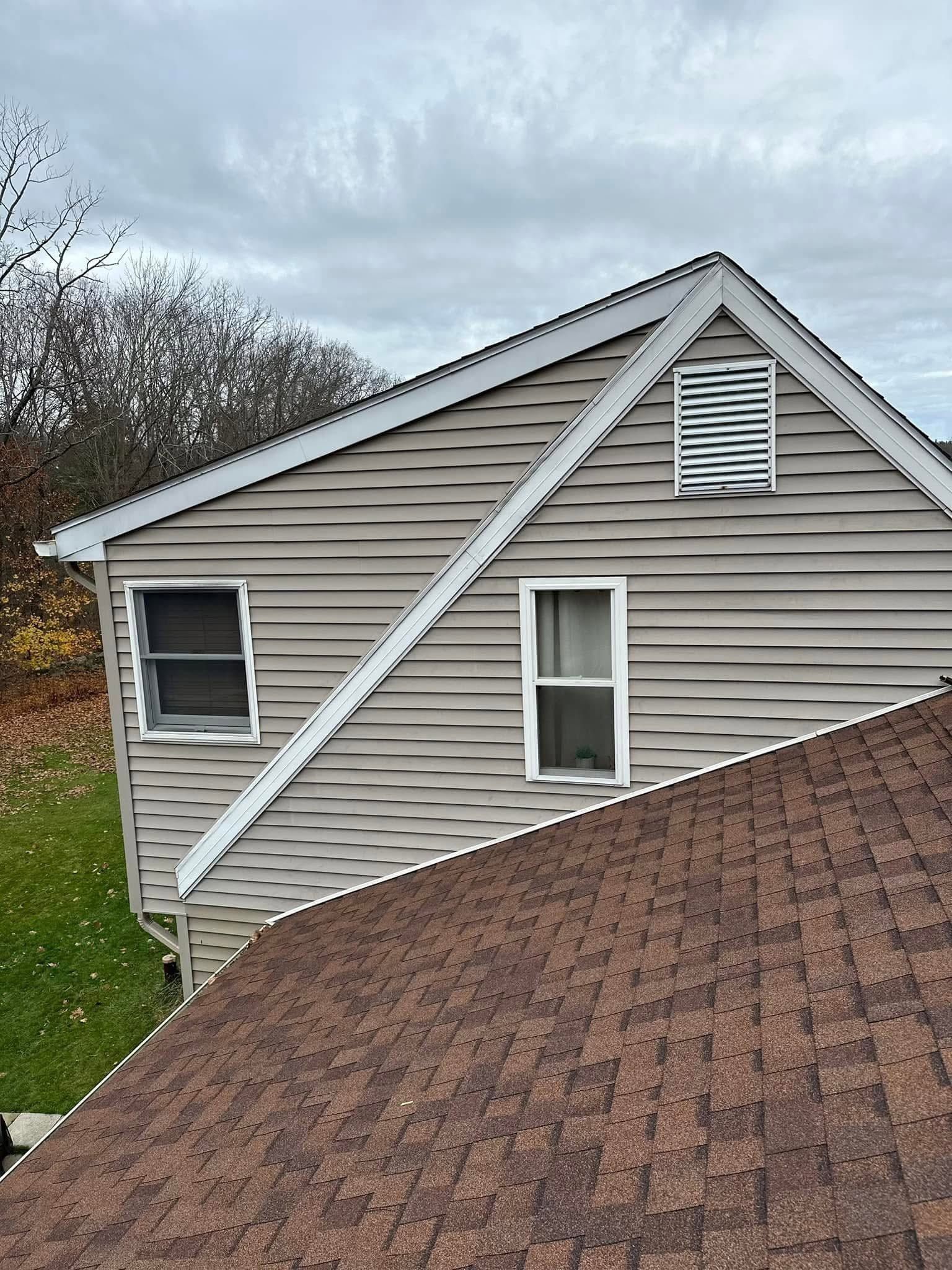
Roofing in Thorndike, MA
A roof rarely announces its failure. It hints. A stain appears on a bedroom ceiling after a stretch of rain and then dries and fades, so it gets forgotten. Grit collects in the gutters each spring and gets flushed out without much thought. Shingle corners start lifting on the south face where the sun hits hardest. By the time water is actually running down a wall, the roof has usually been asking for attention for a couple of years.
J and J Building and Remodeling handles roof repair and replacement for homeowners in Thorndike and across the surrounding Palmer-area communities. Some calls come in as emergencies after a storm peels something back. Plenty of others come from people who simply noticed their roof looks tired and want to know how much life is left in it before they are forced into a decision on someone else's schedule.
Either situation gets the same starting point: an actual assessment. We look at the roof, and we look at what sits under and around it. A roof is an assembly, not a surface, and replacing shingles over unresolved problems underneath is the most expensive shortcut in residential construction.
What This Climate Does to a Roof
Roofs in this part of Massachusetts fail not from a single dramatic event, such as a severe storm or a sudden leak, but rather as a result of a series of repetitive stressors that accumulate over time. The harsh winter months, with their fluctuating temperatures, repeatedly exploit tiny gaps in flashing and shingles, exacerbating pre-existing weaknesses and vulnerabilities. Furthermore, the snow that falls often lingers on roofs for extended periods, melting unevenly and further compromising structural integrity as it seeps into the materials. Nor'easters, with their fierce winds, can drive rain beneath overlaps and cause moisture damage, while the intense heat of summer degrades asphalt shingles, leading to additional wear and tear. Thunderstorms introduce yet more stress, with heavy rain and lightning striking at unpredictable times. These cumulative factors work together, gradually leading to roof failure, which ultimately results from a combination of ongoing and persistent challenges rather than from one isolated incident that might otherwise be easier to pinpoint.
Ice damming deserves specific mention because it is so common around here and so frequently misdiagnosed. Warm air escaping into an attic melts snow on the upper roof, the meltwater runs down to the cold eave, refreezes, and builds a ridge that backs water up beneath the shingles. Homeowners see the icicles and assume the roof is the problem. Usually the roof is the symptom, and the cause is insulation and ventilation not doing their jobs. Putting new shingles on a house with that condition unaddressed means seeing the same leak again.
So we check ventilation at the soffits and ridge, insulation depth and coverage at the attic floor, flashing at chimneys, valleys, sidewalls, and penetrations, and the condition of the decking itself. Soft or delaminated sheathing has to be replaced, not covered. Flashing that was never detailed properly stays a leak point no matter what goes over it. Older homes in the village frequently carry multiple roof planes added on over the decades, and the junctions between those additions are where we find trouble more often than in the open field of a roof.
Roofing Questions We Hear Often
These come up in nearly every conversation with a homeowner weighing roof work.
How Do I Know If I Need a Full Replacement or Just a Repair?
It comes down to how widespread the problem is and the age of what is up there. Damage confined to one area of an otherwise sound roof is usually worth repairing. Once shingles are failing across multiple planes, or the decking underneath has taken on moisture over a broad area, replacement is the better financial decision. We give you the reasoning, not just the verdict.
Can You Put New Shingles Over the Old Ones?
Sometimes it is permitted, and sometimes it is a bad idea regardless. Layering hides the decking so nobody knows its condition, adds weight to the structure, and typically shortens the life of the new material. We evaluate case by case and tell you honestly when tearing off is the right call.
What Time of Year Can Roofing Be Done?
Work goes on through much of the year here. Temperature affects how asphalt shingles seal and how some materials handle, so cold-weather installation requires adjusted methods. If water is actively getting in, waiting for ideal conditions almost always costs more than proceeding.
How Long Does a Roof Replacement Take?
Most straightforward residential roofs are a matter of days rather than weeks. Complexity drives the timeline — multiple planes, steep pitches, several chimneys or skylights, and unexpected decking replacement all extend it. Weather can push the schedule, and we would rather pause than install into conditions that compromise the work.
Will My Insurance Cover Storm Damage?
That depends on your policy and the nature of the damage, and we are not the ones who make that determination. What we can do is document conditions thoroughly so you have clear information when you file. Coverage decisions rest with your insurer.
Getting a Straight Answer About Your Roof
If something about your roof is bothering you, the sensible move is to have it looked at before the next stretch of bad weather forces the issue. We will come out, get up on it where conditions allow, check the attic side, and tell you what we find — including when the answer is that you have several good years left and do not need to spend anything yet.
When work is warranted, we explain the scope, what we expect to find underneath, and how we would handle it if the decking turns out worse than it looks from above. You will know the plan before crews arrive, and you will hear from us directly if what we uncover changes the picture.
Reach out through the contact form with your address and a description of what you are seeing, and we will follow up to schedule a look.
Request a Quote
We will get back to you as soon as possible.
Please try again later.